



As a supplier of rubber hoses, one of the most frequently asked questions I encounter is, "Can a rubber hose be cut to a specific length?" The answer is a resounding yes, and in this blog post, I'll delve into the details of cutting rubber hoses, the factors to consider, and the applications where customized hose lengths are crucial.
Why Cut Rubber Hoses to Specific Lengths?
There are numerous reasons why customers may need rubber hoses cut to specific lengths. In industrial settings, machinery and equipment often require hoses that fit precisely to ensure proper functionality and safety. For example, in a manufacturing plant, hoses used for conveying fluids or gases need to be the exact length to connect different components without any slack or excessive tension.
In automotive applications, custom - length hoses are essential for retrofitting or upgrading vehicles. Mechanics need hoses that match the exact specifications of the engine or other systems to ensure a leak - free and efficient operation.
In home improvement projects, such as plumbing or gardening, a hose of the right length can make the task much more manageable. A too - long hose can be cumbersome to handle and may lead to kinking, while a too - short hose simply won't reach the desired destination.
Types of Rubber Hoses Suitable for Cutting
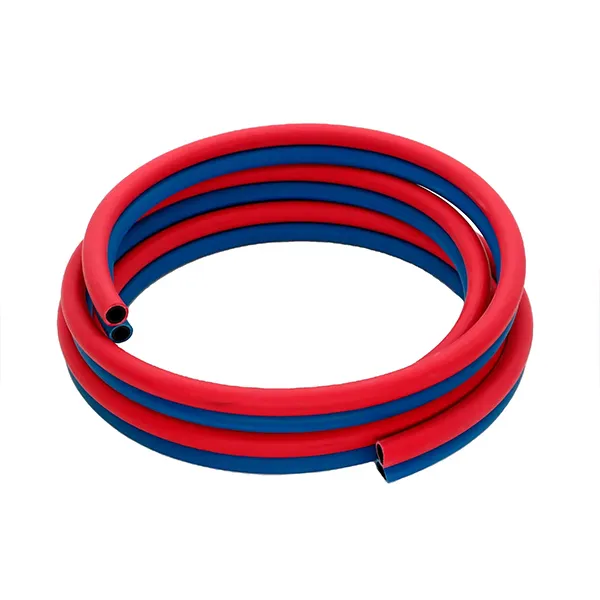
As a rubber hose supplier, I offer a wide range of hoses that can be cut to specific lengths. One popular type is the Twin Welding Hose. This hose is designed for welding applications and is often used to carry acetylene and oxygen gases. Cutting it to the correct length is vital for ensuring a safe and efficient welding process, as it allows for proper positioning of the welding torch and eliminates the risk of tripping over excess hose.
The Oxygen Acetylene Hose is another type that is frequently customized. It is used in various metalworking and welding operations, and having the right length is crucial for maintaining the correct gas flow and pressure.
For the fuel industry, the Fuel Oil Hose is commonly cut to fit specific storage or dispensing systems. Ensuring the hose is the right length helps prevent spills and ensures a smooth transfer of fuel.
Factors to Consider When Cutting Rubber Hoses
Hose Material
Different rubber hoses are made from various materials, each with its own properties. Natural rubber hoses are flexible and have good abrasion resistance, but they may be more prone to damage during cutting. Synthetic rubber hoses, such as neoprene or nitrile, are often more durable and resistant to chemicals, heat, and ozone. When cutting, it's important to use the appropriate tools and techniques based on the hose material to avoid fraying or damaging the inner layers.
Wall Thickness
The thickness of the hose wall affects how it should be cut. Thicker - walled hoses may require more powerful cutting tools, such as a sharp utility knife or a hose cutter. Thinner - walled hoses can be cut with a pair of scissors in some cases, but care must be taken to ensure a clean cut.
Inner Diameter
The inner diameter of the hose is also a critical factor. A smaller inner diameter may require more precision when cutting to avoid any blockages or restrictions in the flow of the fluid or gas. Additionally, the cut end should be properly finished to prevent any debris from entering the hose.

Tools for Cutting Rubber Hoses
Utility Knife
A sharp utility knife is a common tool for cutting rubber hoses. It is suitable for thinner - walled hoses and can provide a relatively clean cut. To use a utility knife, mark the desired length on the hose and then carefully score the outer layer. Rotate the hose and continue scoring until the cut is deep enough to break the hose.
Hose Cutter
A hose cutter is a specialized tool designed specifically for cutting hoses. It provides a clean, straight cut and is ideal for thicker - walled hoses. To use a hose cutter, place the hose in the cutter's jaws and tighten the cutting blade until it makes contact with the hose. Then, rotate the cutter around the hose to make the cut.
Scissors
For very thin - walled rubber hoses, a pair of sharp scissors can be used. However, this method may not be suitable for all types of hoses, as it may not provide a clean enough cut for some applications.
Steps to Cut a Rubber Hose to a Specific Length
- Measure and Mark: Use a measuring tape or ruler to determine the desired length of the hose. Mark the cutting point clearly on the hose using a permanent marker or tape.
- Prepare the Cutting Tool: Ensure that the cutting tool is sharp and in good condition. If using a utility knife, replace the blade if it is dull.
- Secure the Hose: Hold the hose firmly in place to prevent it from moving during cutting. You may use a vise or clamp to secure the hose if necessary.
- Make the Cut: Using the chosen cutting tool, carefully make the cut at the marked point. Apply even pressure and make a smooth, continuous cut.
- Inspect the Cut End: After cutting, inspect the cut end of the hose for any fraying or rough edges. If necessary, use a file or sandpaper to smooth the edges.
Post - Cutting Considerations
Once the hose is cut to the desired length, it may need to be fitted with appropriate connectors or couplings. This is an important step to ensure a proper seal and prevent leaks. Depending on the application, different types of connectors may be required, such as threaded connectors, quick - connect fittings, or barbed fittings.
It's also important to test the hose after installation to ensure that it is functioning properly. Check for any signs of leaks, kinking, or other issues that may affect the performance of the hose.
Conclusion
In conclusion, rubber hoses can indeed be cut to specific lengths, and this customization is often necessary for a wide range of applications. As a rubber hose supplier, I am committed to providing high - quality hoses that can be easily customized to meet your specific needs. Whether you need a Twin Welding Hose, an Oxygen Acetylene Hose, or a Fuel Oil Hose, I have the expertise and products to help you get the job done right.
If you are in need of rubber hoses cut to specific lengths, or have any questions about our products, I encourage you to contact me for a detailed discussion. We can explore the best options for your application and ensure that you receive the perfect hose for your needs.
References
- Industrial Hose Handbook: A comprehensive guide on the selection, installation, and maintenance of industrial hoses.
- Rubber Hose Manufacturing Standards: Published by industry associations, these standards provide guidelines on the quality and performance of rubber hoses.