



Hey there! I'm a supplier of rubber hoses, and I often get asked about how long these hoses last in different environments. Well, let's dive right into it and explore the lifespan of rubber hoses in various settings.
Indoor Environments
First off, let's talk about indoor use. When rubber hoses are used indoors, they're generally protected from a lot of the harsh elements that can wear them down outside. For example, they're shielded from direct sunlight, extreme temperatures, and heavy rain.
In a typical indoor industrial setting, like a factory or a workshop, rubber hoses are often used for tasks such as transferring fluids or gases. The lifespan of these hoses can vary depending on the type of fluid or gas they're carrying. For instance, if they're used to transfer water, like our Rubber Water Hose, they can last a pretty long time. Usually, you can expect a good-quality rubber water hose to last anywhere from 5 to 10 years indoors. That's because water is relatively gentle on the rubber material, and as long as the hose isn't constantly under high pressure or being bent at sharp angles, it'll hold up well.
On the other hand, if the hose is used to transfer chemicals or solvents, the lifespan might be shorter. These substances can be corrosive to the rubber, causing it to break down over time. In this case, you might only get 2 to 5 years out of the hose, depending on the specific chemical and the frequency of use.
Outdoor Environments
Now, let's move on to outdoor environments. This is where things get a bit more challenging for rubber hoses. The sun's UV rays are a major culprit when it comes to shortening the lifespan of rubber. UV rays can cause the rubber to become brittle and crack over time. Additionally, extreme temperatures, both hot and cold, can also take a toll on the hose.
In a sunny and hot climate, like in the desert or a tropical region, the lifespan of a rubber hose can be significantly reduced. For example, a Oxygen Acetylene Hose used for welding outdoors in a hot environment might only last 1 to 3 years. The constant exposure to the sun and high temperatures can cause the rubber to degrade quickly, leading to leaks and other issues.
In cold climates, the rubber can become stiff and lose its flexibility. This makes it more prone to cracking when bent or under pressure. A rubber hose used in a cold outdoor setting, such as for snow removal or in a freezer facility, might last 2 to 5 years. However, if the hose is not properly insulated or protected from the cold, it could fail even sooner.
Marine Environments
Marine environments present a unique set of challenges for rubber hoses. Saltwater is highly corrosive, and the constant exposure to it can cause the rubber to deteriorate rapidly. Additionally, the movement of the water and the waves can put stress on the hose, leading to wear and tear.
A Lpg Hose used on a boat or in a marine industrial setting might only last 1 to 2 years. The saltwater can cause the rubber to swell and lose its strength, and the constant movement can cause the hose to rub against other surfaces, leading to abrasion.
Agricultural Environments
In agricultural settings, rubber hoses are commonly used for irrigation, spraying pesticides, and other tasks. These hoses are often exposed to dirt, mud, and chemicals. The dirt and mud can cause abrasion on the outside of the hose, while the chemicals can be corrosive to the rubber.

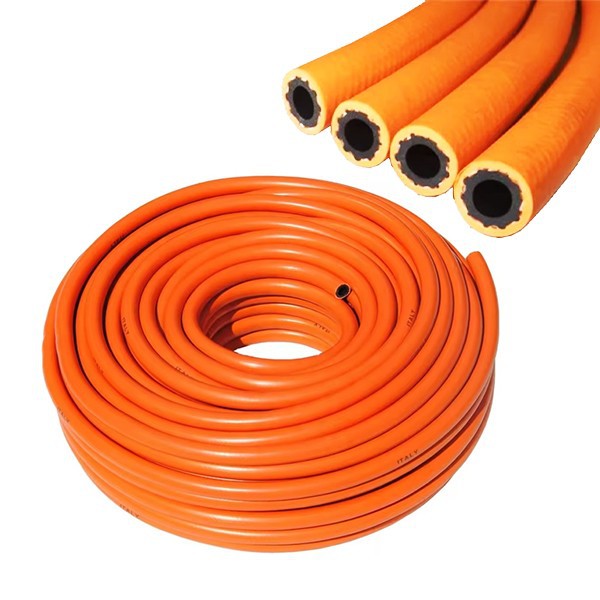
A rubber hose used for irrigation in an agricultural field might last 3 to 7 years. However, if the hose is used to spray harsh pesticides or fertilizers, the lifespan could be shorter, around 2 to 5 years.
Factors Affecting Lifespan
There are several factors that can affect the lifespan of a rubber hose, regardless of the environment. One of the most important factors is the quality of the rubber. Higher-quality rubber hoses are generally more resistant to wear, tear, and chemical damage. They're also more likely to have better reinforcement, which can help prevent the hose from bursting under pressure.
Another factor is the frequency of use. If a hose is used constantly, it'll wear out faster than one that's only used occasionally. Additionally, the pressure and temperature at which the hose operates can also have a big impact on its lifespan. High-pressure and high-temperature applications can cause the rubber to break down more quickly.
Maintenance and Care
Proper maintenance and care can significantly extend the lifespan of a rubber hose. Regularly inspecting the hose for signs of wear, such as cracks, leaks, or bulges, can help you catch problems early and replace the hose before it fails. Cleaning the hose after each use can also help remove dirt, chemicals, and other contaminants that can cause damage.
Storing the hose properly is also important. When not in use, the hose should be stored in a cool, dry place away from direct sunlight. If possible, it should be coiled neatly and hung up to prevent kinking and bending.
Conclusion
So, as you can see, the lifespan of a rubber hose can vary greatly depending on the environment in which it's used. Indoor environments generally offer the longest lifespan, while outdoor, marine, and agricultural environments can be more challenging for the hose. By choosing a high-quality hose, using it properly, and taking good care of it, you can maximize its lifespan and get the most out of your investment.
If you're in the market for a rubber hose, whether it's for indoor, outdoor, marine, or agricultural use, I'd love to help you find the right one for your needs. Just reach out, and we can have a chat about your specific requirements. I'm here to make sure you get a hose that'll last and perform well in your environment.
References
- "Handbook of Rubber Technology" by Maurice Morton
- "Rubber Compounding: Principles, Materials, and Techniques" by Brian M. Lawrie