



When it comes to automotive applications, the correct selection of components is crucial for ensuring vehicle performance, safety, and longevity. One area that often raises questions is the use of special hydraulic hoses in automotive systems. As a leading supplier of special hydraulic hoses, I'm here to explore whether these specialized hoses can be effectively employed in automotive settings, delving into their characteristics, benefits, and potential challenges.
Understanding Special Hydraulic Hoses
Special hydraulic hoses are engineered to meet specific requirements that go beyond the capabilities of standard hoses. They are designed to withstand high pressures, extreme temperatures, and harsh environments, making them suitable for a wide range of industrial and automotive applications. These hoses typically feature advanced materials and construction techniques, such as reinforced layers, synthetic rubber compounds, and high-strength fibers, to enhance their durability and performance.
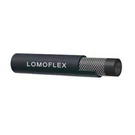
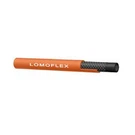
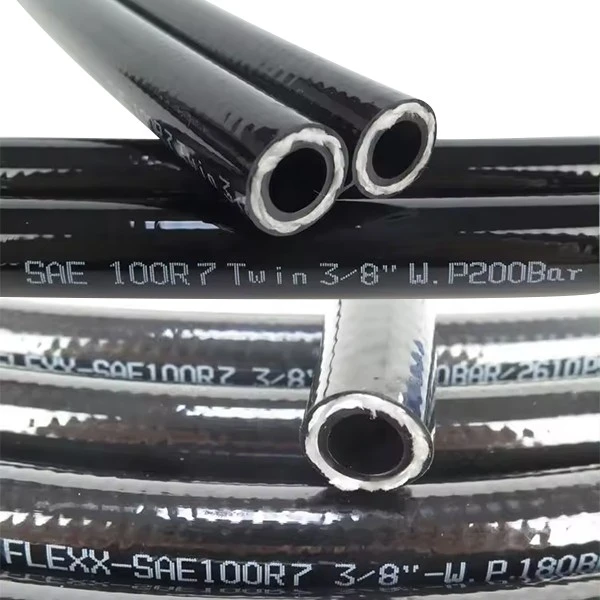
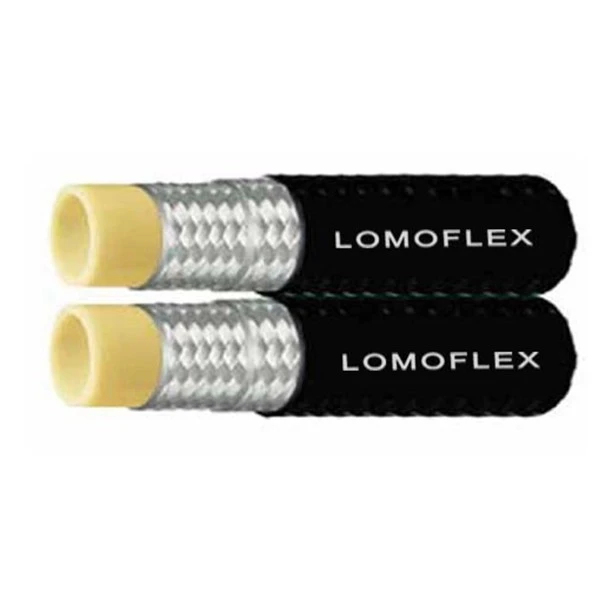
Two examples of special hydraulic hoses that are commonly used in various applications are the Sae100 R8 Thermoplastic Hose and the Sae100 R7 Thermoplastic Hose. The Sae100 R8 Thermoplastic Hose is known for its excellent flexibility, abrasion resistance, and high-pressure capabilities, making it ideal for applications where space is limited and flexibility is required. On the other hand, the Sae100 R7 Thermoplastic Hose offers superior chemical resistance and lightweight construction, making it suitable for applications involving corrosive fluids and weight-sensitive systems.
Advantages of Using Special Hydraulic Hoses in Automotive Applications
1. High-Pressure Handling
Automotive hydraulic systems, such as power steering, brakes, and suspension systems, often operate under high pressures. Special hydraulic hoses are designed to withstand these high pressures without bursting or leaking, ensuring the safe and efficient operation of the vehicle. For example, in a power steering system, the hydraulic hose must be able to handle the pressure generated by the power steering pump to provide smooth and responsive steering control.
2. Temperature Resistance
Automotive engines generate a significant amount of heat, and hydraulic fluids can reach high temperatures during operation. Special hydraulic hoses are engineered to resist the effects of heat, preventing degradation and ensuring consistent performance over a wide temperature range. This is particularly important in applications such as engine cooling systems and transmission controls, where the hoses are exposed to extreme temperatures.
3. Chemical Compatibility
Automotive fluids, such as oil, coolant, and brake fluid, can be corrosive and may cause damage to standard hoses. Special hydraulic hoses are made from materials that are resistant to the chemicals found in automotive fluids, ensuring long-term durability and reliability. For instance, in a brake system, the hydraulic hose must be able to withstand the corrosive properties of brake fluid to prevent leaks and ensure proper braking performance.
4. Flexibility and Bend Radius
Automotive hydraulic systems often require hoses to be routed in tight spaces and around obstacles. Special hydraulic hoses are designed to be flexible and have a small bend radius, allowing them to be easily installed in complex automotive layouts without kinking or restricting fluid flow. This flexibility also helps to reduce stress on the hoses, extending their service life.
Challenges and Considerations
While special hydraulic hoses offer many advantages for automotive applications, there are also some challenges and considerations that need to be taken into account.
1. Cost
Special hydraulic hoses are typically more expensive than standard hoses due to their advanced materials and construction techniques. This can increase the overall cost of the automotive system, especially in high-volume production. However, the long-term benefits of using special hydraulic hoses, such as improved performance, reliability, and safety, often outweigh the initial cost.
2. Compatibility with Existing Systems
When using special hydraulic hoses in automotive applications, it is important to ensure that they are compatible with the existing hydraulic system components, such as fittings, connectors, and valves. Mismatched components can lead to leaks, reduced performance, and even system failure. Therefore, it is essential to consult with a qualified engineer or technician to ensure proper compatibility.
3. Installation and Maintenance
Proper installation and maintenance of special hydraulic hoses are crucial for ensuring their performance and longevity. Incorrect installation, such as over-tightening fittings or improper routing, can cause damage to the hoses and lead to leaks or failures. Regular maintenance, including inspection for wear, damage, and leaks, is also necessary to detect and address any issues before they become serious.
Real-World Examples
To illustrate the practical applications of special hydraulic hoses in the automotive industry, let's look at a few real-world examples.
1. Power Steering Systems
In modern vehicles, power steering systems rely on hydraulic hoses to transmit hydraulic fluid from the power steering pump to the steering gear. Special hydraulic hoses, such as the Sae100 R8 Thermoplastic Hose, are commonly used in power steering systems due to their high-pressure capabilities, flexibility, and resistance to heat and chemicals. These hoses help to ensure smooth and responsive steering control, enhancing the driving experience and safety.
2. Brake Systems
Brake systems are critical for vehicle safety, and hydraulic hoses play a vital role in transmitting brake fluid from the master cylinder to the brake calipers or wheel cylinders. Special hydraulic hoses, such as those designed to withstand high temperatures and pressure, are used in brake systems to ensure reliable and consistent braking performance. The Sae100 R7 Thermoplastic Hose, with its excellent chemical resistance, is often used in brake systems to prevent corrosion and leaks.
3. Suspension Systems
Suspension systems are responsible for providing a smooth and comfortable ride, as well as maintaining vehicle stability and handling. Hydraulic hoses are used in some suspension systems, such as those with hydraulic shock absorbers or active suspension systems, to transmit hydraulic fluid and control the movement of the suspension components. Special hydraulic hoses, with their high-pressure capabilities and flexibility, are well-suited for these applications.
Conclusion
In conclusion, special hydraulic hoses can be effectively used in automotive applications, offering numerous advantages in terms of high-pressure handling, temperature resistance, chemical compatibility, and flexibility. However, it is important to consider the challenges and considerations, such as cost, compatibility, and installation and maintenance, when selecting and using these hoses.
As a supplier of special hydraulic hoses, we are committed to providing high-quality products that meet the specific needs of the automotive industry. Our team of experts can help you select the right hose for your application, ensuring optimal performance, reliability, and safety. If you are interested in learning more about our special hydraulic hoses or would like to discuss your automotive application requirements, please feel free to contact us for a consultation. We look forward to working with you to find the best solution for your needs.
References
- "Hydraulic Hose Handbook," Parker Hannifin Corporation
- "Automotive Hydraulic Systems: Design and Analysis," John Wiley & Sons
- "SAE Standards for Hydraulic Hoses," Society of Automotive Engineers