



Yo, folks! As a supplier of special hydraulic hoses, I get asked a ton of questions. One that comes up pretty often is, "Can a special hydraulic hose be used in high - speed applications?" Well, let's dive right into this topic and break it down.
First off, what do we mean by high - speed applications? In the hydraulic world, high - speed usually refers to systems where fluid is flowing at a really fast rate, or components are moving rapidly. Think about machinery in the automotive industry, like hydraulic presses that operate at high cycles per minute, or in aerospace, where hydraulic systems need to respond quickly to control various flight surfaces.
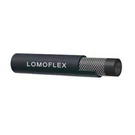
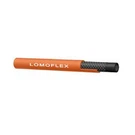
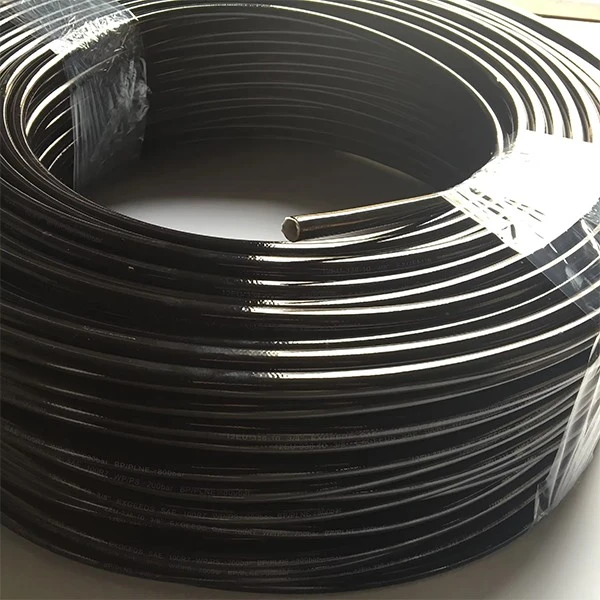
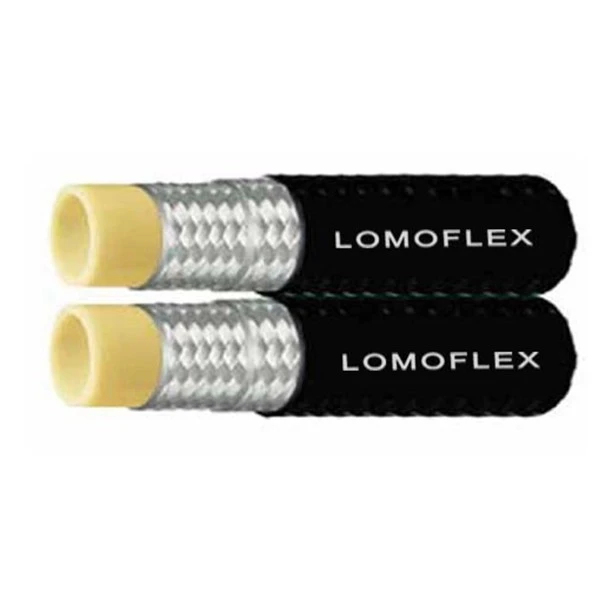
Now, special hydraulic hoses are designed with unique features to meet specific requirements. They're not your run - of - the - mill hoses. For example, we've got hoses like the Sae100 R7 Thermoplastic Hose and the Sae100 R8 Thermoplastic Hose. These hoses are made from thermoplastic materials, which offer some real advantages.
One of the key factors in high - speed applications is flexibility. Thermoplastic hoses are super flexible compared to traditional rubber hoses. This flexibility allows them to bend and move easily without kinking, even when the system is operating at high speeds. Kinking is a big no - no in high - speed setups because it can restrict the flow of hydraulic fluid, leading to a drop in performance and potentially causing damage to the system.
Another important aspect is the inner tube of the hose. In high - speed applications, the fluid is moving fast, and it can create a lot of friction against the inner wall of the hose. Special hydraulic hoses are designed with smooth inner tubes. This reduces friction, which in turn helps maintain a consistent flow rate. When the flow rate is stable, the system can operate more efficiently, and there's less wear and tear on the components.
Pressure handling is also crucial. High - speed applications often come with high pressures. Special hydraulic hoses are engineered to handle these pressures without bursting or leaking. The reinforcement layers in these hoses play a vital role here. For instance, the Sae100 R7 and R8 hoses have strong reinforcement that can withstand the forces generated by high - speed fluid flow and high pressures.
But it's not all sunshine and rainbows. There are some challenges when using special hydraulic hoses in high - speed applications. One issue is heat generation. When fluid moves at high speeds through the hose, it can generate a significant amount of heat. If the hose isn't able to dissipate this heat effectively, it can lead to a breakdown of the hose material over time. That's why some special hoses are designed with heat - resistant materials or have features to help with heat dissipation.
Vibration is another challenge. High - speed systems can produce a lot of vibrations, which can cause the hose to fatigue and eventually fail. Special hydraulic hoses are often made with materials that can absorb and dampen these vibrations. This helps extend the lifespan of the hose and reduces the risk of premature failure.
Now, let's talk about how to choose the right special hydraulic hose for high - speed applications. First, you need to consider the flow rate of the system. You want a hose that can handle the volume of fluid flowing through it at the high - speed operation. Check the specifications of the hose to make sure its flow capacity matches your requirements.
Next, look at the pressure rating. Make sure the hose can handle the maximum pressure that your system will generate. It's better to go for a hose with a slightly higher pressure rating than you actually need to give yourself some safety margin.
The temperature range is also important. Consider the operating temperature of your system, both the normal and any extreme temperatures it might encounter. Choose a hose that can withstand these temperatures without losing its integrity.
So, can a special hydraulic hose be used in high - speed applications? The answer is a resounding yes, but you need to choose the right one. With the right selection and proper installation, special hydraulic hoses can perform really well in high - speed setups.
If you're in the market for special hydraulic hoses for your high - speed applications, don't hesitate to reach out. We've got a wide range of options to suit different needs. Whether it's the Sae100 R7 Thermoplastic Hose or the Sae100 R8 Thermoplastic Hose, we can help you find the perfect fit for your system. Let's start a conversation and figure out the best solution for you.
References:
- Industry standards for hydraulic hoses
- Technical documentation of Sae100 R7 and R8 hoses
- Research on high - speed hydraulic systems