



As a supplier of SAE100R1AT hydraulic hoses, I've had the privilege of witnessing firsthand how these hoses interact with different fluids in a wide range of industrial applications. The SAE100R1AT is a single wire braid hydraulic hose designed to meet the demanding requirements of various hydraulic systems. In this blog post, I'll delve into the intricacies of how SAE100R1AT hoses interact with different types of fluids, exploring the factors that influence their performance and the implications for your hydraulic systems.
Understanding SAE100R1AT Hoses
Before we dive into the interaction between SAE100R1AT hoses and different fluids, let's first understand the key features of these hoses. SAE100R1AT hoses are constructed with an inner tube, a single layer of high - tensile steel wire braid reinforcement, and an outer cover. The inner tube is typically made of synthetic rubber, which is selected for its compatibility with a variety of hydraulic fluids. The steel wire braid provides strength and pressure resistance, while the outer cover protects the hose from environmental factors such as abrasion, weathering, and ozone.
Interaction with Mineral - Based Hydraulic Fluids
Mineral - based hydraulic fluids are one of the most commonly used types of fluids in hydraulic systems. These fluids are derived from petroleum and offer good lubrication, anti - wear properties, and viscosity stability. SAE100R1AT hoses are well - suited for use with mineral - based hydraulic fluids. The synthetic rubber inner tube is formulated to be chemically compatible with these fluids, ensuring that there is no significant swelling, softening, or degradation of the hose material.

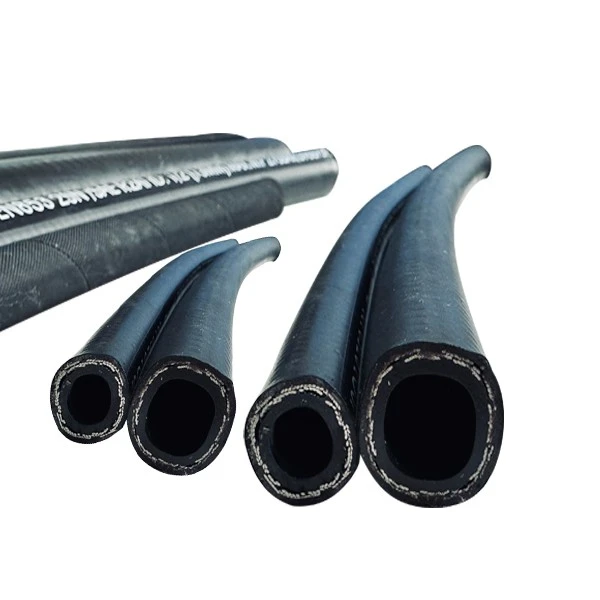
When SAE100R1AT hoses are in contact with mineral - based hydraulic fluids, the fluid forms a thin lubricating film on the inner surface of the hose. This film helps to reduce friction between the fluid and the hose wall, which in turn minimizes wear and tear on the hose. Additionally, the chemical stability of the synthetic rubber inner tube prevents the fluid from penetrating the hose material and causing internal damage.
Interaction with Synthetic Hydraulic Fluids
Synthetic hydraulic fluids, such as phosphate esters, polyalphaolefins (PAOs), and glycol - based fluids, are often used in applications where high - temperature performance, fire resistance, or environmental compatibility is required. The interaction between SAE100R1AT hoses and synthetic hydraulic fluids can be more complex than with mineral - based fluids.
Some synthetic fluids may have different chemical properties that can affect the compatibility of the hose material. For example, phosphate esters are known for their excellent fire - resistance properties but can be aggressive towards certain types of rubber. However, SAE100R1AT hoses with specially formulated inner tubes can be used with phosphate esters. These inner tubes are designed to resist the chemical attack of the phosphate esters, ensuring long - term performance and reliability.
Polyalphaolefins (PAOs) are synthetic hydrocarbons that offer good lubrication and high - temperature stability. SAE100R1AT hoses generally have good compatibility with PAOs, as the synthetic rubber inner tube can withstand the chemical and physical properties of these fluids. Glycol - based fluids, on the other hand, are often used in environmentally friendly hydraulic systems. SAE100R1AT hoses can also be used with glycol - based fluids, provided that the inner tube material is selected for its compatibility with these fluids.
Interaction with Water - Based Hydraulic Fluids
Water - based hydraulic fluids, such as water - glycol mixtures and emulsions, are used in applications where fire safety is a major concern. These fluids have a high water content, which makes them less flammable than mineral - based or synthetic fluids. The interaction between SAE100R1AT hoses and water - based hydraulic fluids is different from that with other types of fluids.
The high water content in these fluids can cause the rubber inner tube of the hose to absorb water over time. This can lead to swelling, softening, and a reduction in the mechanical properties of the hose. To address this issue, SAE100R1AT hoses used with water - based hydraulic fluids are often equipped with inner tubes made of materials that have low water absorption rates. Additionally, the outer cover of the hose may be designed to provide additional protection against water ingress.
Factors Affecting the Interaction
Several factors can affect the interaction between SAE100R1AT hoses and different fluids. Temperature is one of the most important factors. High temperatures can accelerate the chemical reactions between the fluid and the hose material, leading to faster degradation of the hose. For example, in applications where the hydraulic system operates at high temperatures, the compatibility between the SAE100R1AT hose and the fluid becomes even more critical.
Pressure is another factor that can influence the interaction. High - pressure applications can cause the fluid to penetrate the hose material more easily, especially if the hose is not properly designed or installed. Therefore, it is essential to select the appropriate SAE100R1AT hose based on the operating pressure of the hydraulic system.
The quality of the fluid also plays a role. Contaminated fluids can contain particles, acids, or other impurities that can damage the hose material. Regular fluid maintenance and filtration are necessary to ensure the longevity of the SAE100R1AT hoses.
Implications for Hydraulic Systems
The interaction between SAE100R1AT hoses and different fluids has significant implications for the performance and reliability of hydraulic systems. A well - matched combination of hose and fluid can result in a longer service life of the hose, reduced maintenance costs, and improved system efficiency.
On the other hand, if the hose and fluid are not compatible, it can lead to premature hose failure, fluid leakage, and potential damage to other components in the hydraulic system. For example, if the inner tube of the SAE100R1AT hose swells due to incompatibility with the fluid, it can restrict the flow of the fluid, leading to reduced system performance.
Other Related Hydraulic Hoses
In addition to SAE100R1AT hoses, there are other types of hydraulic hoses available in the market that may be suitable for different applications. For instance, the Sae100 R2at is a double wire braid hydraulic hose that offers higher pressure ratings compared to SAE100R1AT hoses. The Din En853 1sn is a European standard single wire braid hydraulic hose, which may have different specifications and performance characteristics. And the Hydraulic Rubber Hose Sae100 R17 is designed for specific high - pressure applications.
Conclusion
In conclusion, the interaction between SAE100R1AT hoses and different fluids is a complex but crucial aspect of hydraulic system design. As a supplier of SAE100R1AT hoses, we understand the importance of selecting the right hose for the specific fluid and application. By considering factors such as fluid type, temperature, pressure, and fluid quality, we can ensure that our customers get the best performance and reliability from their hydraulic systems.
If you are in the market for SAE100R1AT hoses or have any questions about their compatibility with different fluids, we encourage you to contact us for a detailed discussion. Our team of experts is ready to assist you in making the right choice for your hydraulic system needs.
References
- "Hydraulic Hose Handbook", Parker Hannifin Corporation
- "Fluid Power Technology", Eaton Corporation
- "SAE J517 Standard for Hydraulic Hose Assemblies", Society of Automotive Engineers