



Hey there, folks! As a supplier of wire spiral hoses, I often get asked about the flexibility rating of these nifty pieces of equipment. So, I thought I'd take a few minutes to break it down for you.
First off, let's talk about what a wire spiral hose is. It's a type of hydraulic hose that consists of an inner tube, reinforcement layers made of wire spirals, and an outer cover. These hoses are designed to handle high-pressure applications, making them a popular choice in industries like construction, agriculture, and manufacturing.
Now, the flexibility rating of a wire spiral hose is a measure of how easily it can be bent or flexed without kinking or damaging the internal structure. This rating is crucial because it determines how well the hose can adapt to different installation requirements and operating conditions.
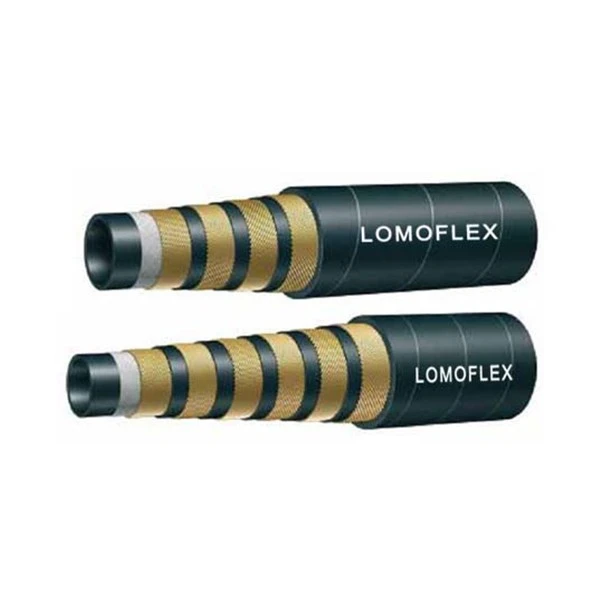

There are several factors that can affect the flexibility rating of a wire spiral hose:
1. Number of Wire Layers
The more wire layers a hose has, the higher its pressure rating but the lower its flexibility. For example, a hose with four wire layers will be more rigid than one with two wire layers. This is because the additional wire provides more reinforcement, making the hose stronger but less pliable.
2. Wire Diameter
The diameter of the wire used in the reinforcement layers also plays a role. Thicker wires generally result in a stiffer hose, while thinner wires allow for more flexibility. However, thinner wires may not be able to withstand as much pressure as thicker ones, so it's a bit of a balancing act.
3. Hose Inner Diameter
A larger inner diameter typically means a less flexible hose. This is because there's more material to bend, and the increased volume of fluid inside the hose can also make it more resistant to flexing.
4. Outer Cover Material
The material of the outer cover can affect flexibility. Some materials are more rigid, while others are more flexible. For instance, a hose with a tough, abrasion-resistant outer cover may be less flexible than one with a softer, more pliable cover.
So, how do we measure the flexibility rating of a wire spiral hose? Well, there isn't a single standardized method, but one common way is to look at the minimum bend radius. The minimum bend radius is the smallest radius that the hose can be bent without causing damage. A smaller minimum bend radius means the hose is more flexible.
Let's take a look at some specific examples of wire spiral hoses and their flexibility ratings. We offer a range of hoses, including the Sae100 R15, Sae100 R13, and Sae100 R12.
The Sae100 R15 is a high-pressure hose with four wire layers. It's designed for heavy-duty applications where high pressure and durability are required. Due to its four wire layers, it has a relatively high pressure rating but a lower flexibility compared to hoses with fewer wire layers. The minimum bend radius for the Sae100 R15 is larger than some of our other hoses, which means it needs more space to bend without kinking.
On the other hand, the Sae100 R12 has two wire layers. This makes it more flexible than the Sae100 R15, with a smaller minimum bend radius. It's a great choice for applications where flexibility is a priority, such as in tight spaces or where the hose needs to move frequently.
The Sae100 R13 is somewhere in the middle. It has three wire layers, offering a good balance between pressure rating and flexibility. It can handle moderate to high-pressure applications while still being relatively easy to bend and install.
When choosing a wire spiral hose for your application, it's important to consider the flexibility rating along with other factors like pressure rating, temperature range, and chemical compatibility. You don't want to end up with a hose that's too rigid for your installation or one that can't handle the pressure requirements.
If you're not sure which hose is right for you, don't worry! That's what we're here for. Our team of experts can help you evaluate your needs and recommend the best hose for your specific application. Whether you need a highly flexible hose for a tight space or a high-pressure hose for a heavy-duty job, we've got you covered.
So, if you're in the market for a wire spiral hose, give us a shout. We're happy to answer any questions you have and help you find the perfect hose for your needs. Let's work together to get your project up and running smoothly!
References
- Hydraulic Hose Handbook: A comprehensive guide to understanding the properties and applications of hydraulic hoses.
- Industry standards and regulations related to wire spiral hoses, including those set by organizations like SAE (Society of Automotive Engineers).