

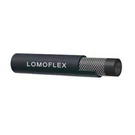
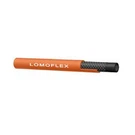


As a leading supplier of SAE100 R5 hydraulic hoses, I am often asked about the UV resistance of our products. UV resistance is a crucial factor in many applications, especially those where the hoses are exposed to sunlight for extended periods. In this blog post, I will delve into what UV resistance means for SAE100 R5 hoses, how it is measured, and the importance of this property in real - world scenarios.
Understanding UV Resistance
UV, or ultraviolet, radiation is a part of the electromagnetic spectrum emitted by the sun. It is divided into three types: UVA, UVB, and UVC. While UVC is mostly absorbed by the Earth's atmosphere, UVA and UVB can reach the surface and cause damage to various materials, including rubber, which is commonly used in the outer cover of SAE100 R5 hoses.
When a hose is exposed to UV radiation, the rubber in its outer cover can undergo a process called photodegradation. This involves the breaking of chemical bonds in the rubber due to the high - energy UV photons. As a result, the rubber can become brittle, crack, and lose its flexibility and strength over time. This not only affects the appearance of the hose but also its performance and safety.
Measuring UV Resistance
There are several methods to measure the UV resistance of SAE100 R5 hoses. One common approach is through accelerated aging tests. In these tests, samples of the hose are placed in a chamber where they are exposed to high - intensity UV light for a specified period. The conditions in the chamber, such as temperature, humidity, and UV intensity, are carefully controlled to simulate long - term outdoor exposure in a relatively short time.
After the exposure period, the samples are examined for changes in physical properties. These may include changes in hardness, tensile strength, elongation at break, and the appearance of cracks on the surface. The results of these tests are then used to evaluate the hose's ability to withstand UV radiation and predict its service life under real - world conditions.
UV Resistance of SAE100 R5 Hoses
SAE100 R5 hoses are designed for use in low - pressure hydraulic systems. The outer cover of these hoses is typically made of synthetic rubber, which can vary in its UV resistance depending on the specific formulation.
At our company, we use advanced rubber compounds in the production of SAE100 R5 hoses to enhance their UV resistance. These compounds contain additives such as UV stabilizers and antioxidants. UV stabilizers work by absorbing the UV radiation and converting it into heat, thereby preventing it from causing damage to the rubber. Antioxidants, on the other hand, help to prevent the oxidation of the rubber, which is another process that can be accelerated by UV exposure.
Our SAE100 R5 hoses have been tested extensively in accelerated aging chambers, and the results have shown excellent UV resistance. They can withstand long - term exposure to sunlight without significant degradation of their physical properties. This means that they can maintain their flexibility, strength, and integrity even when used in outdoor applications for an extended period.


Importance of UV Resistance in Real - World Applications
The UV resistance of SAE100 R5 hoses is of great importance in many real - world applications. For example, in agricultural machinery, these hoses are often used in equipment that operates outdoors for long hours. If the hoses do not have good UV resistance, they can crack and leak hydraulic fluid, which can lead to reduced equipment performance, increased maintenance costs, and potential safety hazards.
In construction and mining applications, SAE100 R5 hoses are also exposed to harsh outdoor conditions. The ability of these hoses to resist UV radiation ensures their reliability and longevity, reducing the need for frequent replacements and minimizing downtime.
Comparison with Other Hose Types
When considering UV resistance, it is also useful to compare SAE100 R5 hoses with other types of hydraulic hoses. For instance, the SAE100R1AT hoses are wire - braid hoses designed for medium - pressure applications. While they also need to have good UV resistance, their design and rubber compounds may be different from those of SAE100 R5 hoses.
Similarly, Din En857 1sc and Din En857 2sc hoses, which are European - standard wire - braid hoses, have their own characteristics in terms of UV resistance. However, our SAE100 R5 hoses are specifically formulated to provide excellent UV resistance for low - pressure applications, making them a reliable choice in outdoor environments.
Ensuring Long - Term Performance
To ensure the long - term performance of SAE100 R5 hoses in UV - exposed environments, proper installation and maintenance are also crucial. During installation, it is important to avoid sharp bends and kinks in the hose, as these can create stress points that are more susceptible to cracking. The hose should also be protected from direct contact with sharp objects that could damage the outer cover.
Regular inspection of the hoses is also recommended. This includes checking for signs of cracking, brittleness, or leakage. If any damage is detected, the hose should be replaced immediately to prevent further problems.
Conclusion
In conclusion, the UV resistance of SAE100 R5 hoses is a vital property that affects their performance, reliability, and safety in outdoor applications. Our company takes great care in formulating the outer cover of our SAE100 R5 hoses to ensure excellent UV resistance. Through advanced rubber compounds and rigorous testing, our hoses can withstand long - term exposure to sunlight without significant degradation.
If you are in need of high - quality SAE100 R5 hoses with excellent UV resistance for your hydraulic systems, we are here to help. We offer a wide range of products that meet the highest industry standards. Contact us today to discuss your specific requirements and start a procurement discussion.
References
- ASTM D518 - Standard Test Method for Rubber Property - Resistance to Cracking When Exposed to Light.
- ISO 4665 - Rubber, vulcanized or thermoplastic - Determination of changes in properties after exposure to heat, oxygen and light.
- SAE J517 - Standard for Hydraulic Hose Assemblies.