



Hey there! As a supplier of wire braid hoses, I've seen firsthand how wire braids can make a huge difference in a hose's resistance to kinking. So, let's dive into this topic and figure out exactly how wire braids play a role in keeping hoses kink - free.
First off, what's a wire braid? Well, it's a layer of wire that's woven around the inner tube of a hose. This wire can be made from different materials, like steel, which is super common because it's strong and durable. The way the wire is woven also varies. You can have a single - layer braid, or multiple layers for added strength.
Now, let's talk about kinking. Kinking is a real pain in the neck for anyone using hoses. When a hose kinks, it restricts the flow of fluid or gas inside. This not only reduces the efficiency of the system but can also cause damage over time. Imagine using a garden hose that keeps kinking up - it's frustrating and it won't water your plants properly. In industrial settings, kinking in hydraulic hoses can lead to equipment failures and costly downtime.
So, how does the wire braid help with kinking? One of the main ways is by providing structural support. The wire braid acts like a cage around the inner tube of the hose. When the hose is bent or twisted, the wire braid distributes the stress evenly across the hose. Instead of all the stress concentrating in one spot and causing a kink, it's spread out, making it less likely for the hose to kink.
Let's take a look at some of our products. For example, our Hydraulic Rubber Hose Sae100 R17. This hose has a well - designed wire braid that gives it excellent resistance to kinking. The braid is made from high - quality steel wires that are tightly woven. This tight weave provides a lot of support to the inner tube, allowing the hose to bend and flex without kinking easily.
Another product is the SAE100R1AT. It's a popular choice for many applications because of its balance between flexibility and kink resistance. The wire braid on this hose is engineered to be both strong and flexible. It can withstand a fair amount of bending and twisting, making it suitable for use in areas where the hose needs to move around a bit.
The Sae100 R2at is also worth mentioning. This hose has a double - layer wire braid, which provides even more support compared to single - layer braided hoses. The two layers of wire work together to distribute stress and prevent kinking. It's great for high - pressure applications where kinking could be a serious problem.
The number of layers in the wire braid matters a lot. Generally, the more layers of wire braid a hose has, the better its kink resistance. A single - layer braided hose is more flexible but may kink more easily under extreme conditions. On the other hand, a double or triple - layer braided hose is stiffer but offers much better protection against kinking. It's all about finding the right balance for your specific application.
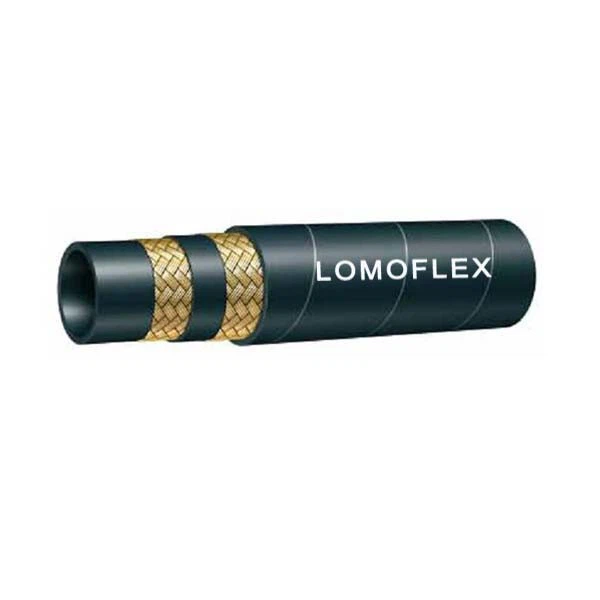

The pitch of the wire braid also affects kink resistance. The pitch is the distance between the turns of the wire in the braid. A smaller pitch means the wire is more tightly wound around the inner tube. This results in a hose that's more resistant to kinking because the wire provides more continuous support. However, a hose with a smaller pitch may be less flexible. So, again, it's a trade - off between flexibility and kink resistance.
The material of the wire braid is another important factor. As I mentioned earlier, steel is a popular choice because it's strong. But there are other materials too, like stainless steel. Stainless steel is corrosion - resistant, which is great for hoses used in harsh environments. It can also provide good kink resistance, although it may be a bit more expensive.
The quality of the wire braid manufacturing process also plays a role. If the wire is not woven properly, there may be weak spots in the braid. These weak spots can cause the hose to kink more easily. At our company, we use state - of - the - art manufacturing techniques to ensure that our wire braids are of the highest quality. We test each hose to make sure it meets our strict standards for kink resistance.
In some applications, the outer cover of the hose can also affect kink resistance. A tough outer cover can protect the wire braid from damage, which in turn helps maintain the hose's kink - resistant properties. For example, if the outer cover is abrasion - resistant, it can prevent the wire braid from getting worn down, which could lead to kinking.
Now, you might be wondering which hose is right for your needs. If you're in an application where the hose needs to be very flexible and doesn't face extreme bending, a single - layer braided hose like the SAE100R1AT might be a good choice. But if you're dealing with high - pressure systems or harsh environments, a multi - layer braided hose like the Sae100 R2at could be more suitable.
If you're interested in our wire braid hoses and want to learn more about how they can improve your operations, I encourage you to reach out. Whether you're in the automotive industry, construction, or any other field that uses hoses, we have the expertise and products to meet your needs. Contact us to discuss your requirements and let's find the perfect hose for your application. We're always happy to help you make the right choice and ensure that you get a hose that performs well and lasts a long time.
References
- Industry standards on hose manufacturing and performance
- Technical manuals from wire braid hose manufacturers
- Research on the mechanical properties of wire braid materials