

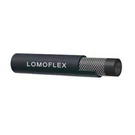
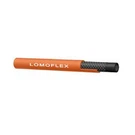


Textile braid hoses are widely used in various industries due to their flexibility, cost - effectiveness, and relatively good performance in certain applications. As a supplier of textile braid hoses, I have a deep understanding of both their advantages and disadvantages. In this blog, I will focus on the drawbacks of textile braid hoses to provide a comprehensive view for potential customers.
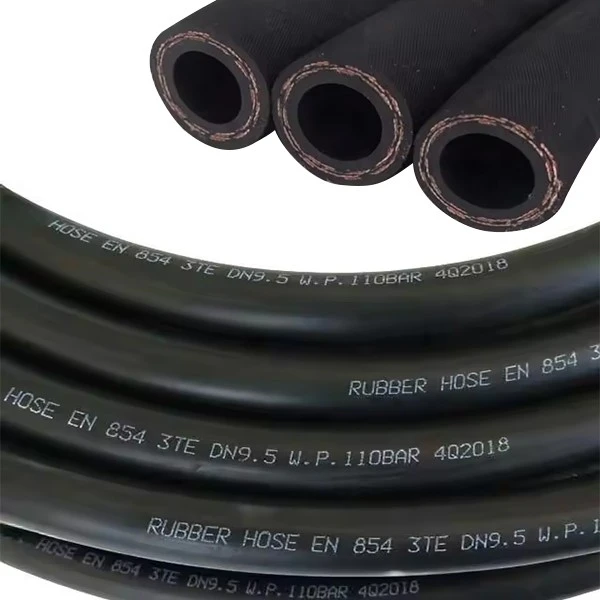

1. Limited Pressure Resistance
One of the most significant disadvantages of textile braid hoses is their limited pressure - handling capacity. Textile braid hoses are typically reinforced with materials such as polyester, nylon, or cotton. These materials, while providing a certain degree of strength, are not as robust as metal - based reinforcements like steel wire braids.
For example, in high - pressure hydraulic systems, where pressures can reach several thousand pounds per square inch (psi), textile braid hoses may not be suitable. The textile reinforcements can stretch and deform under high pressure, leading to a decrease in the hose's internal diameter. This reduction in diameter can cause an increase in fluid velocity, which may result in pressure drops, increased energy consumption, and even damage to the hose itself over time.
Compared to steel - braided hoses, which can withstand much higher pressures, textile braid hoses are generally rated for lower pressure applications. For instance, some Din En854 3te Or Sae 100 R3 textile braid hoses are designed for working pressures up to around 1,500 - 2,000 psi, while steel - braided hoses can handle pressures well above 5,000 psi. This limitation restricts the use of textile braid hoses in many heavy - duty industrial applications, such as large - scale construction equipment, mining machinery, and high - pressure hydraulic presses.
2. Poor Abrasion Resistance
Another major drawback of textile braid hoses is their relatively poor abrasion resistance. The outer cover of textile braid hoses is often made of rubber or a similar polymer material, which is more vulnerable to abrasion compared to the hard - wearing outer layers of steel - braided hoses.
In industrial environments where hoses are exposed to rough surfaces, sharp edges, or moving parts, textile braid hoses can quickly wear down. For example, in manufacturing plants where hoses may rub against conveyor belts, metal frames, or other equipment, the outer cover of the textile braid hose can be easily scratched or punctured. Once the outer cover is damaged, the underlying textile reinforcements are exposed, making the hose more susceptible to further damage and potential failure.
Abrasion can also lead to a decrease in the hose's overall strength and integrity. As the outer cover wears away, moisture and contaminants can penetrate the hose, causing corrosion of the textile reinforcements and reducing the hose's ability to withstand pressure. This can result in leaks, which not only pose safety hazards but also lead to costly downtime for maintenance and replacement.
3. Temperature Sensitivity
Textile braid hoses are highly sensitive to temperature changes. The materials used in the textile reinforcements and the outer cover have specific temperature ranges within which they can function effectively.
At high temperatures, the polymer materials in the outer cover and the textile reinforcements can start to degrade. The outer cover may become soft and sticky, losing its protective properties. The textile reinforcements can also weaken, reducing the hose's pressure - handling capacity. For example, in applications where hoses are exposed to hot machinery, exhaust systems, or direct sunlight, the performance of textile braid hoses can be severely affected.
Conversely, at low temperatures, the materials in the hose can become brittle. The outer cover may crack, and the textile reinforcements may lose their flexibility. This can lead to reduced hose flexibility, making it difficult to install and causing stress on the connections. In cold - weather environments, such as outdoor construction sites in winter or refrigerated warehouses, textile braid hoses may require additional insulation or heating to maintain their performance.
The temperature sensitivity of textile braid hoses limits their use in applications with extreme temperature variations. In contrast, steel - braided hoses can often tolerate a wider range of temperatures, making them more suitable for harsh industrial environments.
4. Chemical Compatibility Issues
Textile braid hoses may have limited chemical compatibility with certain fluids. The materials used in the hose construction, including the inner tube, textile reinforcements, and outer cover, can react with various chemicals, solvents, and oils.
For example, some textile braid hoses are not compatible with strong acids or alkalis. Exposure to these chemicals can cause the inner tube to swell, the textile reinforcements to break down, and the outer cover to deteriorate. This can lead to leaks, reduced flow rates, and ultimately, hose failure.
In industries such as chemical processing, oil and gas, and food and beverage production, where hoses are often in contact with a variety of chemicals and fluids, careful consideration must be given to the chemical compatibility of the hose. Textile braid hoses may not be the best choice in these applications, as they may require more frequent replacement or additional protective measures to ensure safe and reliable operation.
5. Shorter Service Life
Due to the above - mentioned disadvantages, textile braid hoses generally have a shorter service life compared to other types of hoses, such as steel - braided hoses. Their limited pressure resistance, poor abrasion resistance, temperature sensitivity, and chemical compatibility issues all contribute to a higher likelihood of premature failure.
In high - stress applications, textile braid hoses may need to be replaced more frequently, which can increase maintenance costs and downtime. This can be a significant drawback for businesses that rely on continuous operation of their equipment. For example, in a manufacturing plant, frequent hose replacements can disrupt production schedules, leading to lost productivity and increased costs.
6. Lower Flexibility in Some Applications
Although textile braid hoses are known for their flexibility, in certain applications, their flexibility may not be sufficient. In applications where hoses need to be bent at extremely tight angles or in confined spaces, the textile reinforcements can restrict the hose's ability to flex.
The stiffness of the textile reinforcements can make it difficult to achieve the required bend radius without causing kinking or damage to the hose. This can be a problem in applications such as robotics, where hoses need to follow the movements of the robot's arms and joints. In these cases, more flexible hose designs, such as those with specialized elastomeric reinforcements, may be required.
Conclusion
While textile braid hoses have their advantages, such as cost - effectiveness and initial flexibility, they also come with several significant disadvantages. Their limited pressure resistance, poor abrasion resistance, temperature sensitivity, chemical compatibility issues, shorter service life, and lower flexibility in some applications make them less suitable for many heavy - duty and demanding industrial environments.
However, this does not mean that textile braid hoses have no place in the market. For low - pressure, low - stress applications where cost is a major factor, they can still be a viable option. For example, Din En854 1te Or Sae 100 R6 textile braid hoses are often used in light - duty hydraulic systems, such as those found in small - scale machinery and automotive applications.
If you are considering using textile braid hoses for your application, it is essential to carefully evaluate your specific requirements. Our team of experts can help you determine whether textile braid hoses are the right choice for your needs. We can also provide guidance on proper installation, maintenance, and replacement to ensure the safe and efficient operation of your hoses. If you have any questions or would like to discuss your procurement needs, please feel free to reach out to us. We are ready to assist you in finding the best hose solutions for your business.
References
- Industrial Hose Handbook: A comprehensive guide to hose materials, design, and applications.
- Hydraulic Systems Engineering: Textbook covering the principles of hydraulic systems and the performance of different types of hoses.
- Manufacturer's technical documentation on textile braid hoses.